We have compiled a list of manufacturers, distributors, product information, reference prices, and rankings for Plant powder.
ipros is IPROS GMS ・ IPROS One of the largest technical database sites in Japan that collects information on.

Plant powder Product List and Ranking from 4 Manufacturers, Suppliers and Companies | IPROS GMS

Plant powder Product List

1~6 item / All 6 items

Displayed results

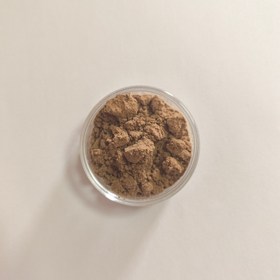
「苦みの王」カルメグ粉末 [サンプル提供]

King of Bitterといわれる非常に苦い熱帯薬用植物 SARSやコロナウイルスにも効果が期待

カルメグは、南アジアや東南アジアにおいて広く栽培されており、伝統的に、感染症やいくつかの疾患治療として使われてきた。 学名:Andrographis paniculata 日本名:カルメグ(Karmegh) インドネシア名:サンビロト(Sambiloto) 中国名:センシンレン(穿心蓮) 葉、茎、根など全草は苦く、King of Bitter (苦さの王)と呼ばれる。 インドネシア、インド、中国に分布する。 伝統医学の医薬品として南アジア、東南アジアで使用されている。 主に根や葉が薬用として用いられ、インドネシアでは強壮薬として「ジャムゥ」と呼ばれる伝承医薬品に加えられている。 カルメグの薬理効果としては、抗炎症、抗アレルギー、抗肥満、抗糖尿病、抗腫瘍、心筋炎、肝臓機能防御、抗マラリア、抗菌、抗酸化の各作用が報告されている。 さらに生命情報学的解析により、カルメグの主要有用成分のAndrographonoideがSARS-CoV-2ウイルスの細胞内侵入、蛋白合成、炎症性サイトカインを抑制し、感染細胞の生存に寄与することが報告されている。

  • Food ingredients (powder)
  • Plant powder

Added to bookmarks

Bookmarks list

Bookmark has been removed

Bookmarks list

You can't add any more bookmarks

By registering as a member, you can increase the number of bookmarks you can save and organize them with labels.

Free membership registration

PANMOL B-Complex (Panmol)

Quinoa sprout powder, a food ingredient rich in 8 types of vitamin B group. 100% quinoa.

PANMOL B-Complex is a powder made from quinoa that has been uniquely sprouted using proprietary manufacturing techniques, then dried and ground. One gram of PANMOL B-Complex provides the recommended dietary intake for each vitamin. It is designed to enhance the nutrition of the B vitamin group and is made from 100% quinoa. <Features> ● Dried powder of quinoa sprouts ● Complex of 8 types of B vitamins (Vitamin B1, B2, B6, B12, Biotin, Pantothenic acid, Niacin, Folic acid) ● High bioavailability ● Allergen-free ● Kosher and Halal compliant

  • Food ingredients (powder)
  • Plant powder

Added to bookmarks

Bookmarks list

Bookmark has been removed

Bookmarks list

You can't add any more bookmarks

By registering as a member, you can increase the number of bookmarks you can save and organize them with labels.

Free membership registration

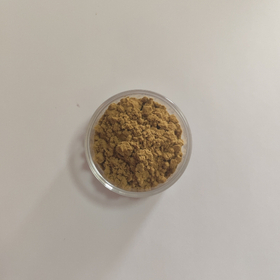
Kankani Nikujou Enzyme Decomposition Powder High Water Solubility - Contains Echinacoside

An enzyme-decomposed raw material that differs from general Kan Kan Nikujou extract powder. It is treated with a complex enzyme and contains a highly water-soluble powder that includes phenylethanoid glycosides.

This is a plant-derived powdered ingredient made from carefully selected raw materials of Cistanche tubulosa (Kankani Nikujou) grown in the desert area of the Inner Mongolia Alashan region, using an enzyme decomposition method. Kankani Nikujou is a plant material derived from the genus Cistanche of the Orobanchaceae family. In Japan, it is distributed as "Kankani Nikujou" and is treated as a type of Nikujou. Its main components include phenylethanoid glycosides such as echinacoside and acteoside (verbascoside). The most significant feature of this product is its "complex enzyme decomposition" technology, which differs from typical Nikujou powder or Kankani Nikujou extract powder. The Kankani Nikujou from Alashan is treated with multiple enzymes to process it into a more soluble form while retaining as many of the original components as possible. After enzyme treatment, the material undergoes processes such as separation, purification, and concentration before being powdered. It is designed as an enzyme-decomposed Kankani Nikujou raw material, distinct from simple crushed raw materials or general extracts. Containing phenylethanoid glycosides such as echinacoside and acteoside (verbascoside), it is suitable for the development of health foods and supplements focusing on components derived from Nikujou.

  • Food ingredients (powder)
  • Food/beverage functional materials
  • Plant powder

Added to bookmarks

Bookmarks list

Bookmark has been removed

Bookmarks list

You can't add any more bookmarks

By registering as a member, you can increase the number of bookmarks you can save and organize them with labels.

Free membership registration

Hydroponic Mulberry - Sara Mulberry

The world's only plant factory for hydroponic cultivation of mulberry - "Sara Mulberry"

Our company has independently developed everything from the design of plant factories, equipment, cultivation techniques, to product development, and we have also built evidence through joint research with Niigata University of Pharmacy and Applied Life Sciences. We successfully achieved the world's first hydroponic cultivation of mulberry (Morus), and it was later discovered that controlling the cultivation environment also increases the content of components within the plants. We were able to harvest lateral roots that are impossible to collect from outdoor mulberry, and components exceeding those found in mulberry leaves (such as polyphenols) were also confirmed. The mulberry leaves from our plant factory and hydroponic cultivation are very tender, and we named them "Sara Mulberry" (trademark registered), which can be eaten in salads. Sara Mulberry contains a high amount of hydrophobic polyphenols (Sara Kua Polyphenols) that are rarely found in outdoor mulberry, and it also has a high content of components like 1-DNJ.

  • Company:morea
  • Price:Other
  • Other food and beverage ingredients
  • Plant powder

Added to bookmarks

Bookmarks list

Bookmark has been removed

Bookmarks list

You can't add any more bookmarks

By registering as a member, you can increase the number of bookmarks you can save and organize them with labels.

Free membership registration

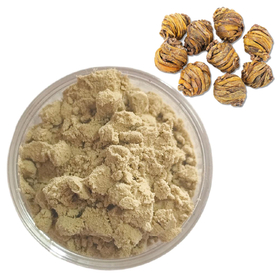
Teppisekkoku Enzyme Decomposed Powder, Dendrobium Polysaccharides 40% or More, High Water Solubility

A method of "enzyme decomposition" that differs from extracts. A next-generation Dendrobium ingredient processed with complex enzymes from Yunnan's Teppeisekkoku, achieving over 40% Dendrobium polysaccharides and high water solubility.

This product is a plant-derived powdered ingredient made from Yunnan-produced Dendrobium officinale, manufactured using a "composite enzymatic decomposition" technology that differs from typical simple grinding products or extracts. By combining enzymes such as cellulase and pectinase and processing plant tissues under mild conditions, it facilitates the solubilization of components like polysaccharides in the raw material. The processing minimizes excessive thermal stress, allowing for a design that preserves the original composition of the raw material. The main feature is that it is an "enzymatically decomposed powder" that enhances water solubility through enzymatic treatment, rather than a typical "Dendrobium extract" that has been concentrated and dried. It has high clarity when added to water and is designed to minimize sedimentation, making it a suitable ingredient for powdered beverages, liquid drinks, tablets, and solid drinks. As quality indicators, the measured values of Dendrobium polysaccharides are 41.34% and Dendrobium flavonoids are 0.78%. Dendrobium polysaccharides are known as one of the key components that characterize Dendrobium officinale and are gaining attention in the health food and beauty food sectors. In contrast to standard powders that face challenges in solubility and blendability, the enzymatic decomposition processing technology itself can be proposed as added value.

  • Food ingredients (powder)
  • Food/beverage functional materials
  • Cosmetic materials and raw materials
  • Plant powder

Added to bookmarks

Bookmarks list

Bookmark has been removed

Bookmarks list

You can't add any more bookmarks

By registering as a member, you can increase the number of bookmarks you can save and organize them with labels.

Free membership registration

Enju Kaika Enzyme Decomposition Powder High Solubility - Contains Rutin/Quercetin

A complex enzyme decomposition technology different from general extracts. Enzyme-treated sophora flower buds are transformed into a highly water-soluble powder containing rutin, quercetin, flavonoids, and more.

This product is a plant-derived high water-soluble powder made from the flower buds of the Sophora japonica (Japanese pagoda tree) using a complex enzyme decomposition technology. In Japan, the flower buds of Sophora japonica are known as the medicinal herb "Kaika," which corresponds to the raw materials called "Huai Mi" and "Huai Hua Mi" in China. Kaika is recognized as a plant material containing rutin and is also used as a raw material for rutin production. The most significant feature of this product is that it employs a decomposition process using complex enzymes, unlike typical "Kaika powder" or simple "Sophora extract." It gently processes the raw material tissue using complex carbohydrate-decomposing enzymes such as cellulase and pectinase, along with protease, to make the components more easily transferable to an aqueous state. The main quality indicators are set at over 10% quercetin and approximately 7% crude polysaccharides. It contains components derived from the flower buds of Sophora japonica, including flavonoids such as rutin and quercetin, as well as polysaccharides. This material can be proposed to Japanese manufacturers seeking "enzyme-decomposed raw materials" that differ from conventional plant extracts for health foods, beverages, beauty products, plant-derived functional materials, and OEM/ODM products.

  • Food/beverage functional materials
  • Pharmaceutical materials and carriers
  • Food ingredients (powder)
  • Plant powder

Added to bookmarks

Bookmarks list

Bookmark has been removed

Bookmarks list

You can't add any more bookmarks

By registering as a member, you can increase the number of bookmarks you can save and organize them with labels.

Free membership registration